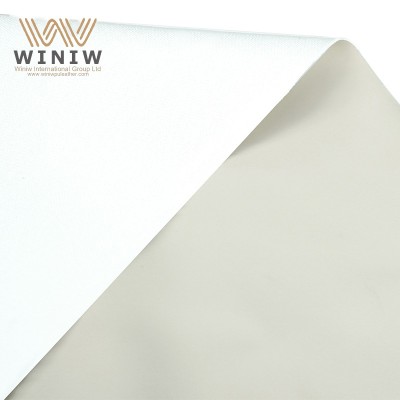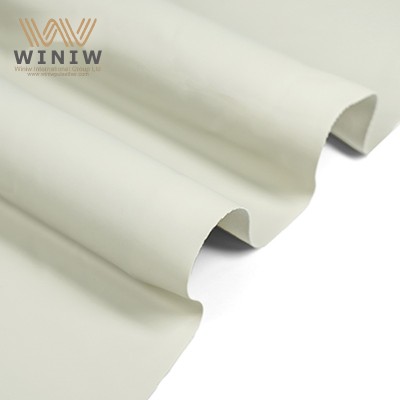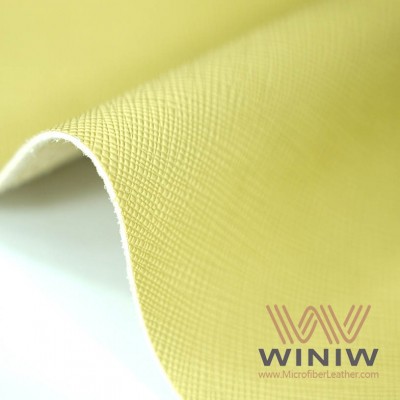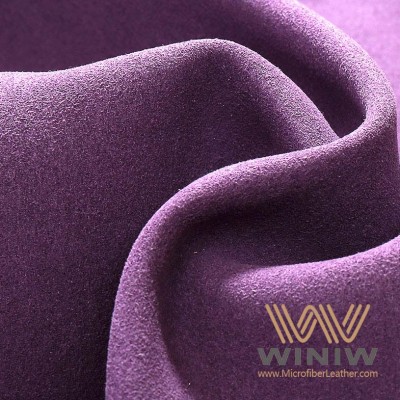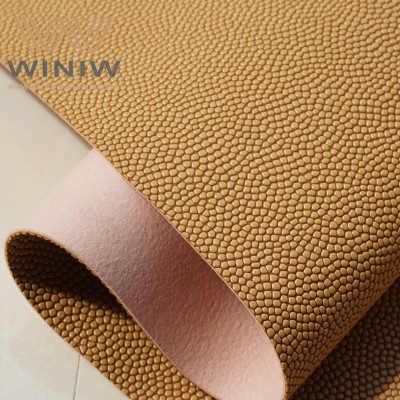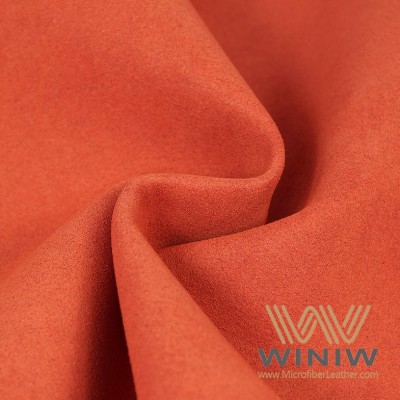
Hand someone a cartier jewelry box and they will not read the printing first. They will run a nail along one edge, close the case, and listen. What they are testing is tolerance: whether the skin sits on the shell without a shoulder, whether the two halves meet in an even shadow, whether the hinge returns without a click. Those three answers decide whether the object feels expensive, and every one of them is a material decision made months earlier.
This page is a buyer’s inspection guide, not a brand history. It is written for packaging developers, rigid-box converters and quality staff who have to approve a skin, sign off a first article and explain a rejection to a workshop. It covers the gauge range we coat, what the seam reveals, where hardware loads the skin, and what a reportable inspection record actually contains.
Disclosure: WINIW is a material supplier. We coat the skin; we do not build cases for, or act for, any brand named on this page. The tells described below are craft marks that any converter can produce or avoid, they are not an authenticity test, and no supplier should sell them as one.
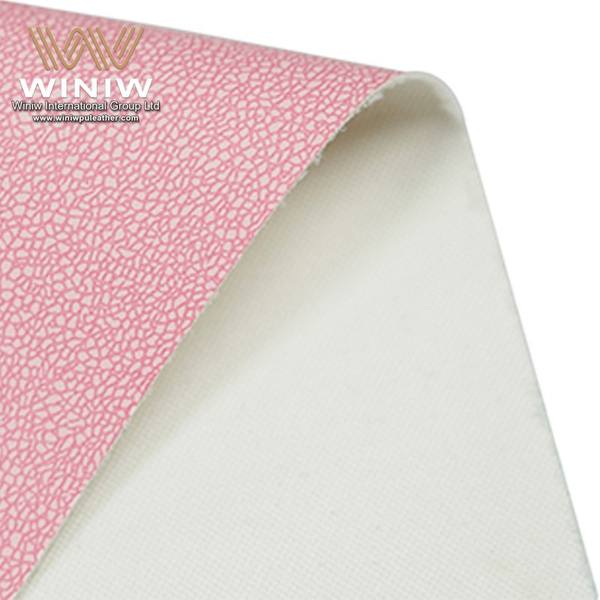
Expensive is not a finish, it is an absence. Absence of a shoulder where the skin turns. Absence of a highlight where the surface has been drawn thin. Absence of the small inconsistency that makes the eye stop and look twice. Craft is repeatability at that level, not one perfect specimen, and repeatability is what a material either supports or fights.
A skin that fights the bench produces an object that is right on the first article and wrong on the four hundredth, because the operator has to compensate by hand and hand-work drifts. When buyers ask why a cheaper sheet “looks the same”, the honest answer is usually that it looks the same in a photograph and behaves differently at the point where the skin has to travel around a radius without thinning.
So the specification that matters is not the colour chip. It is the pair: a face that holds its pattern under tension, and a substrate that gives without stretching out of shape. Nearly everything an inspector flags later traces back to that pair.
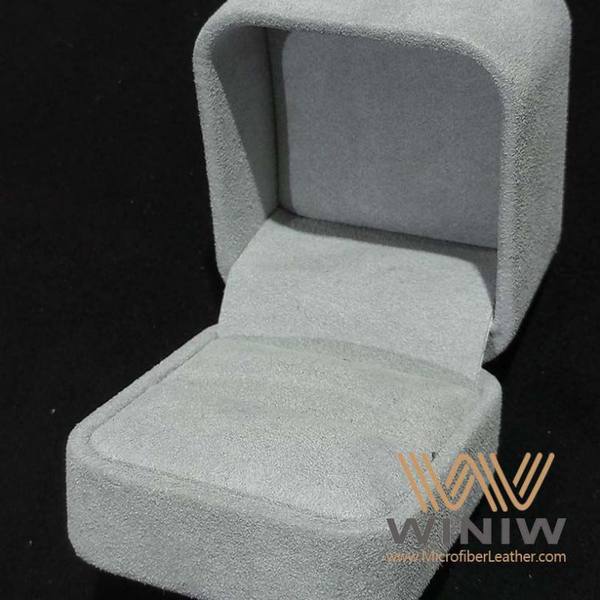
An inspector reads three joints, in this order. The rim: where skin meets the opening, a correct job shows one continuous line of face material and no pale band. A pale band means the coating has been drawn thin over the turn, and it will lift first. The closure: shut the case and look at the shadow between the halves. A shadow that narrows at one corner is a tolerance error made at the cutting stage, and it cannot be corrected afterwards.
The third joint is the least examined and the most predictive: the inside lip of the opening, where the interior material terminates. A clean termination sits below the rim on a straight line. A rolled termination shows a soft gather, acceptable on a hand-made piece, a yield problem on a production line, because the gather depth varies from operator to operator.
None of this requires opening the case far. It requires light at a low angle, a straight edge, and the discipline to reject a specimen rather than argue about it. The specific wrinkle that shows along these seams is covered on the wrinkle-resistant PU page.
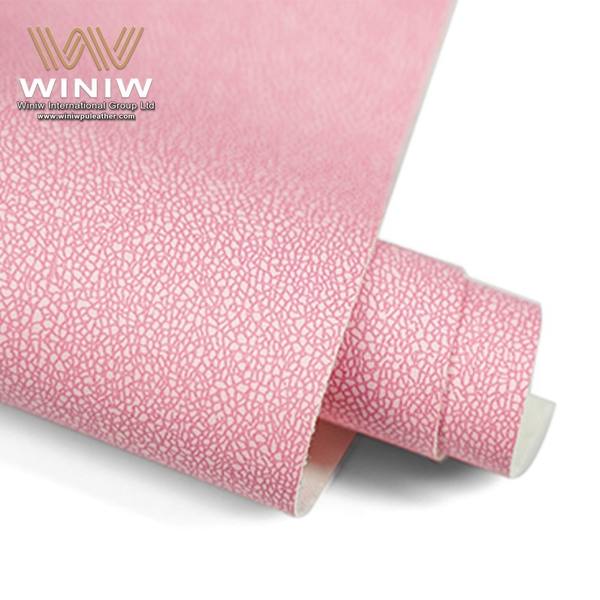
Buyers tend to pick the heaviest skin they can afford, because heavier feels better in the hand. On a small format that instinct produces the worse object: a 0.6 mm skin on a 60 mm footprint adds 1.2 mm across the closure, and the two halves stop meeting cleanly. The gauge should come from the radius and the allowable growth, and only then be checked by feel.
Our three numbers behave differently in practice. 0.4 mm travels a tight radius cold and keeps a slim profile, so it suits ring and pendant formats where closure tolerance is small. 0.5 mm absorbs minor variation and is the safe middle of a gifting range. 0.6 mm is for a wide surface or a piece that should carry weight, and it needs The greyboard cut smaller to leave room for the turn.
Two supply details belong in the same conversation. Stock runs at 54″ / 137 cm, and small-format work wastes a large share of that unless the panels are nested; ask for the nesting plan with the quotation rather than after the first delivery. Minimum order is 300 m per colour on the standard range, which matters on a multi-colour family where four shades are four separate commitments.
Most of the failures we are asked about are not on a flat surface. They sit next to a magnet, a hinge or a ribbon slot, where the skin is cut, punched or compressed and the load lands in a few square millimetres. A magnet recessed a fraction too shallow lifts the covering into a dome that catches light and reads as a defect from a metre away. A hinge fixed through the skin without a liner plate crushes the substrate locally and starts a tear that runs along the edge.
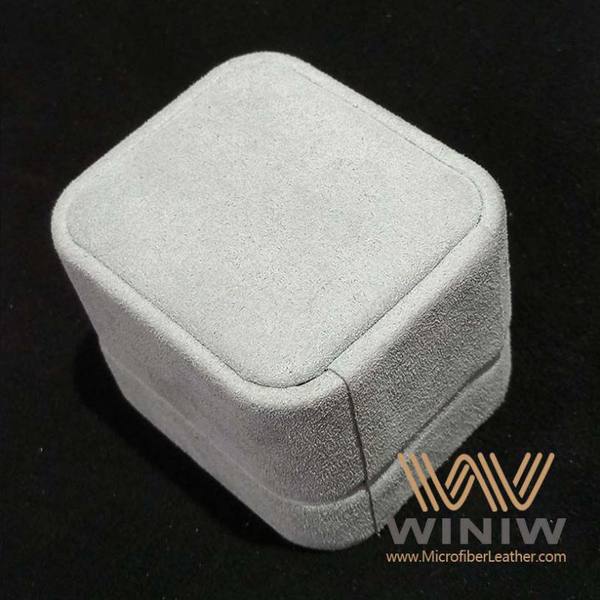
The material side of that answer is a substrate with enough body to spread a point load. A woven substrate distributes compression along its yarns; a paper substrate creases at the same spot every time. If your design places a magnet within 8 mm of an edge, say so when you request the skin, because the substrate choice changes and the sample should be built with the right one.
An object is approved in an office and judged under a shop spotlight, and those are two different tests. On an embossed or matte skin the pattern scatters light, so a small pigment difference reads as a difference in depth rather than in hue. Two panels that match on a desk can separate visibly on a lit shelf, and the panel that separates is always the one from the later coating run.
The fix is procedural, not technical. Keep the approved specimen in a drawer rather than in a memory. Write the run number into the first-article report so a reorder can be matched to it. And where a range has to look identical for years, place the annual quantity against one run instead of quarterly slices, a larger single commitment is usually cheaper than the drift it prevents.
The table is written the way an inspection sheet is written: what each number is for, and where the risk sits. The last row is the one that matters most in a tender, it is the honest state of the file.
|
Gauge
|
What it suits
|
Where the risk sits
|
|
0.4 mm
|
Small formats, tight radii, slim profiles
|
A wet bond slides and the thin face records it
|
|
0.5 mm
|
Middle of a gifting range
|
Closure tolerance if The greyboard was cut to 0.4
|
|
0.6 mm
|
Wide surfaces, drawer fronts, weight in the hand
|
Growth at the turn if The greyboard allowance was missed
|
|
Stock form
|
54″ / 137 cm, or panels to a nesting plan
|
Waste on small formats if nobody nests
|
|
Order quantity
|
300 m per colour, standard range
|
Each shade is a separate commitment
|
|
Peel, flex endurance, abrasion, fastness
|
No measured value is held for this grade
|
Name the method and the panel size, and it gets run
|
A first-article sign-off is only useful if someone else can repeat it six months later. Five entries make that possible on a skin delivery.
There is no abrasion entry and no flex-endurance entry on that list, because those tests have not been run against this grade. A borrowed figure from an adjacent product line would look like rigour and behave like a liability the first time a customer’s own lab disagreed with it. WINIW has coated synthetic leather for converters for more than twenty years; the discipline that comes with it is knowing which figures survive a season on a shop floor.
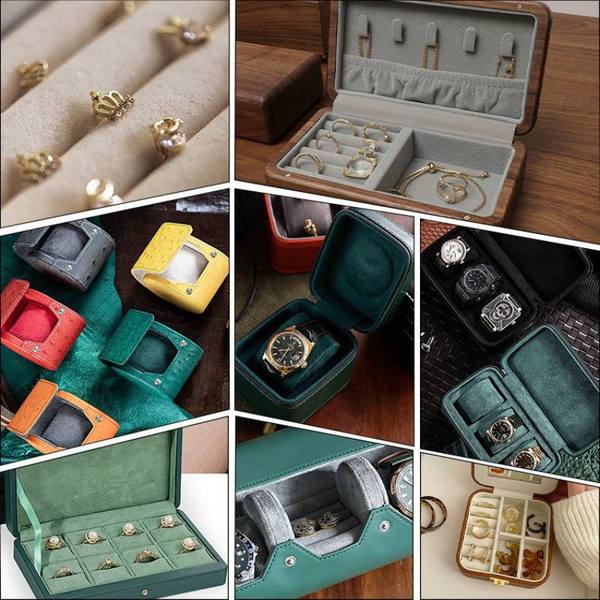
A programme usually ships several formats in one visual language, and consistency is easier to hold on the material side than at the bench. Keep the gauge constant across the family and change The greyboard where a piece must feel heavier; changing the skin per format makes one colour read differently under a spotlight. Keep the interior construction constant too, so an insert pulled from one case drops into the next without a second approval.
Where the family includes a soft piece, a pouch, a roll or a travel wallet, the constraints change and the interior brief moves with them, which is why that specification sits on its own page: travel case lining specs.
Most enquiries are inspection questions in disguise. Can this skin run on our existing die, meaning, will the substrate travel the radius without thinning. Will it match the last delivery, meaning, can colour be held across runs. Will it lift near the magnet, meaning, does the substrate spread a point load. Answering them in that order saves a sample round, because each one is decided by a property rather than a preference.
Two more come up on every luxury brief. The first is whether a paper-wrapped case can be upgraded in place. It can, if The greyboard was cut with the skin allowance in mind; if it was not, the closure has already been decided and a heavier covering makes the gap worse rather than better. The second is what to send for a first article, our answer is a wrapped corner on your own board, at your own radius, in the gauge you intend to run, because a flat swatch cannot show a shoulder.
Beyond that, the buying conversation is ordinary: how the roll is packed, whether panels can be nested, and what the commitment is per shade. On a four-colour family, that last number decides the project more often than the unit price does.
Do seams and tolerance prove a case is genuine?
No. They prove how carefully it was built. A well-equipped converter can hit the same tolerances as a brand’s own supplier, and a careless run can miss them on a genuine article. Treat the inspection as a quality signal; authentication is a different discipline and not something a material supplier can offer.
How do I know which gauge my die can take?
Measure the smallest radius in the drawing and the growth you can absorb at the closure. A 3–5 mm radius on a small format points to 0.4 mm; a wide face with a generous closure can carry 0.6 mm. If the two answers disagree, the drawing is the constraint, not the skin.
Why does a reorder look a shade deeper than the first run?
Because on a matte or embossed face the pattern scatters light, and a small pigment shift reads as depth rather than hue. File a physical specimen, record the run number, and place annual volume against one run where the range has to stay static.
The skin lifts beside the magnet. Is that the material?
Usually it is the recess depth plus a substrate that cannot spread the load. A woven substrate distributes compression along its yarns; a paper substrate creases at one point. Tell us the magnet position when you request the skin and the sample will be built with the right substrate.
Can the covering be used for the interior as well?
Not where jewelry touches it. A coated sheet will not compress under a ring or a chain, so the piece sits proud and the lid presses on the stone. Interiors move to a suede or velvet-faced lining, specified on its own basis, see the fitted suede lining page.
Is there a tarnish-control version of the skin?
Tarnish control belongs to the interior build, not to the outer skin, and the two are kept separate on purpose. A covering that advertises a tarnish rate is usually describing chemistry it does not contain. The lining construction is set out on the anti-tarnish lining sheet.
For the interior side of the same case see fitted suede linings and anti-tarnish lining; for tray work, die-cut tray sheets; for display, crackle-face embossed PU.
Business Phone : +8618150976625
E-mail : Hello@MicrofiberLeather.com
Mobile & WhatsApp : +8618150976625
Адрес : W6-302 Shimao Manhadun Shuanglong Road, Jinjiang Quanzhou Fujian China



© Авторские права 2022 Винив Интернэшнл Ко., Лтд..Все права защищены.
XML | Политика конфиденциальности |